Welcome to
Wayland Access & Rigging!
Working At Height And Safety: The Essential Thing To Know About Secure Handling
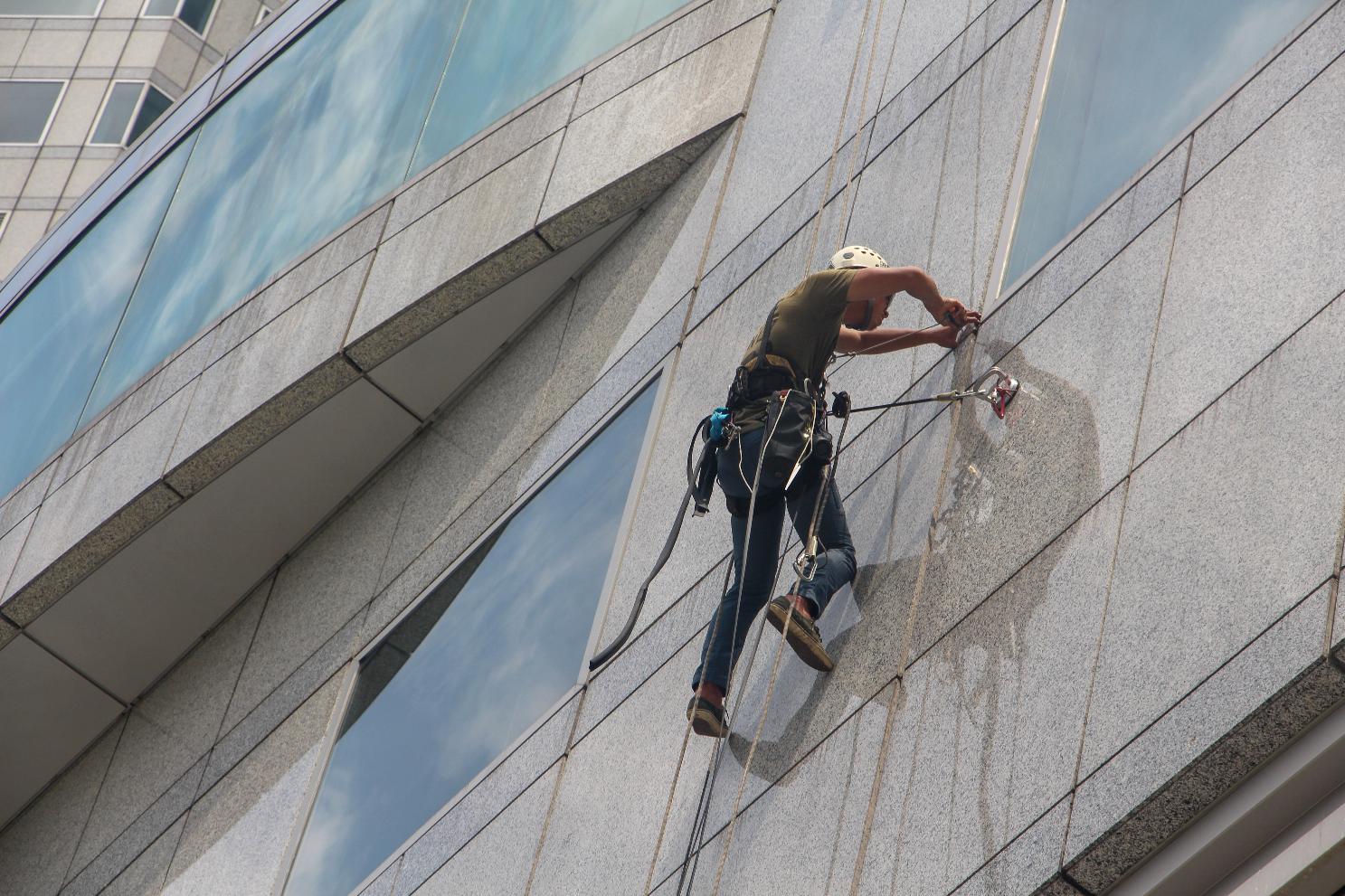
Working at height on an ad hoc or regular basis presents risks. In France, falls from height are the second leading cause of death at work and the third leading cause of permanent disability and work stoppages. According to national data for the year 2012, falls from height represent 71925 accidents at work, 52 deaths and 6 033 760 days lost from work (ie 16% of lost working days).
For the construction sector alone, falls from height accounted for 17435 work stoppages. They were also the direct cause of the death of 29 employees. Nearly 31% of falls from height are linked to ladders or stepladders, 11.4% to scaffolding and 5.4% to roofs, terraces, glass roofs, etc. These figures published by the Ministry of Labor are without appeal.
This is why prevention, regulations and safety equipment are at the heart of the issue of working at height. Precisions with TRIAX, specialist in secure handling.
The means of prevention
The analysis of the situation raises questions about the working methods in depth: have all the solutions been considered to eliminate or at least minimize the danger? The reorganization of workstations and protective equipment is at the center of the reflections:
Thus, preventive measures are available at different levels:
- The risk assessment without limiting itself to height alone: take into account the difference in altitude, the frequency of access, the intervention time. In short, analyze all the risks related to the task to be performed by the worker: The reflection must cover all workstations concerned by a risk of falling from heights, including those related to maintenance. The risk assessment should also include an examination of the conditions of access to the work stations at height (ladders, stepladders, etc.). This approach often requires involving different actors (designers, project owners, equipment users, etc.) to arrive at a satisfactory solution.
- The installation of a permanent protection equipment: security lock barrier, lifting platform, scaffolding, permanent bodyguard, secure footbridges, or personal fall arrest protection: safety harness, fall arrest system, protection against falls.
- Staff training: essential and mandatory, workers must master the use of work equipment providing collective protection, and also know and apply the instructions concerning the wearing of personal protective equipment (PPE fall protection).
Adapted work equipment at height
Dorothée WAVRER, from TRIAX (specialist in the field of secure handling), recalls that handling remains the most important cause of accidents at work. The INRS (National Institute for Research and Safety for the Prevention of Accidents at Work and Occupational Diseases) also confirms this. This is why the equipment must not only comply with strict standards, but also be adapted to the handling activity.
As a security barrier, pallet locker, mobile ladder and sloping gangways, Triax offers systems that not only prevent accidents, but are also designed to offer optimal ergonomics. These are all equipment that can quickly and simply install security solutions for operators at risk of falling.
Exposures to risks are varied, so the equipment is too. Here are some different situations where handling at height presents a risk and adapted equipment.
Bodyguard:
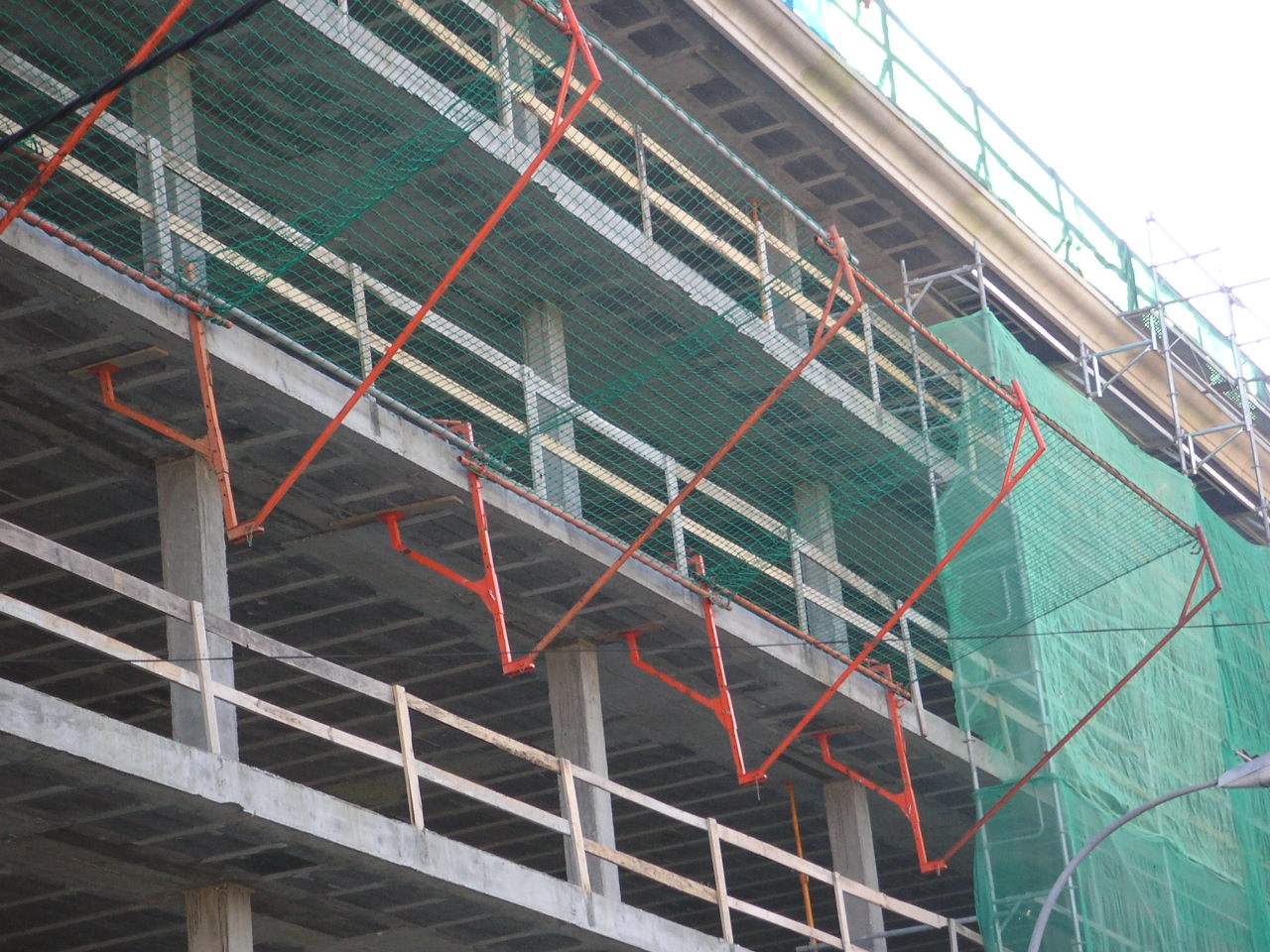
Guardrails are the most used collective protection device. They are intended to avoid falls from height and delimit a dangerous area. The railings are fixed securely. They are designed to withstand the efforts of the work, whether these efforts are static or not, they are adapted to the worker's movements. Their height is standardized: between 1m and 1m10 from the floor. There are fixed, permanent and other provisional guardrails and therefore removable.
Safety lock gate; / pallet box:
Safety lock gates protect the operator when handling loads between different levels. The barrier forms a security lock for the operator working on a platform or on the floor of a building. The staff can move safely and proceed with the loading and / or unloading of pallets or loads. The installation of a sluice gate allows compliance of the mezzanine or the platform.
On a mezzanine or on a platform, the handling of pallets at the edge of a vacuum, by means of a forklift, encourages operators to use retractable guardrails or simple chains. The risk of falling from the operator or the load is important. The principle of the safety barrier is to ensure the continuity of the guardrails around the areas of deposit charges.
Access to domes and cisterns:
Access to the tank domes can be by means of a moving ladder or a sloping bridge. Access and interventions on the road and rail tank domes can present serious risks of accidents (falls greater than 2m50) when the means of protection are not used to protect the operators.
Users can be confronted with two types of situations during these interventions: either from a fixed station or from a mobile station. The security solutions are therefore folding gateways or mobile ladders for access on tanks, or integral protections for access on tanks and sets combining access platform and gateway flap.
As working equipment, ladders, stepladders and steps are subject to a number of requirements. In particular, their materials and their assembly must be solid, resistant, and must allow a suitable use of the equipment from the ergonomic point of view. Their stability must be ensured.
Wayland access provide you all service you need. Our expert will visit your premises and perform an analysis to determine the safety action plan. Our team offers Safety netting Sydney and Rope access painting Sydney.
for more details visit our website waylandaccess.com.au
Our Services
Anchor Point Certification & Anchor Point Installers Sydney
Contact
www.facebook.com/SydneyAbseiling/
https://au.linkedin.com/in/wayland-howard-7a4357168
81 Victoria Rd, Marrickville NSW 2201
0413 450 699
Contact Us
© Copyright Wayland Access & Rigging - Safety Netting & Rope Access Painting Sydney